
The problem
Gas control is one of the main risks in RAS. Uncontrolled levels of oxygen, nitrogen, carbon dioxide or hydrogen sulphide can affect fish welfare quickly and, in severe cases, lead to acute mortality.
What happens in practice
Gas levels can change faster than expected and are not always visible before the fish are affected. CO₂ can accumulate, nitrogen supersaturation can create stress and hydrogen sulphide can form locally under poor conditions.
What matters
Gas levels must always remain within defined limits. A RAS facility cannot only be designed for normal operation. It must also be able to handle variation, peak loads, operational changes and unexpected events.
Pure Salmon Technology’s approach
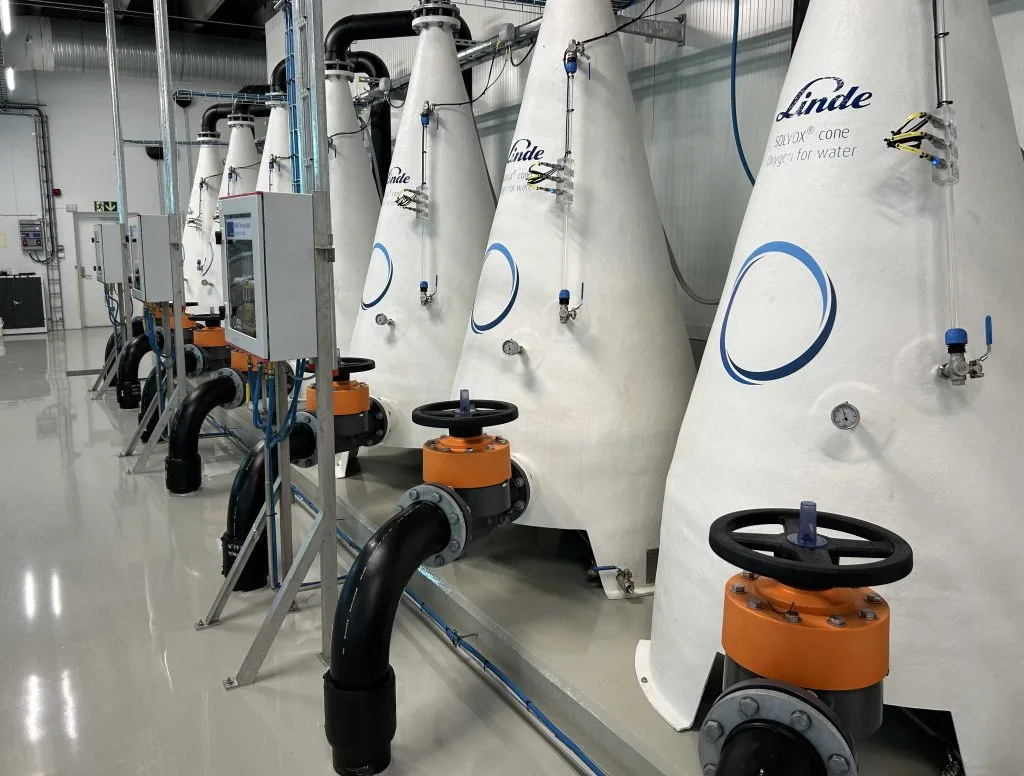
At Pure Salmon Technology, we design gas control as an integrated part of the RAS process. We focus on hydraulic design, flow distribution, degassing capacity, oxygen control, monitoring and alarm response across the full operating range.
Key takeaway
Gas control is not a secondary detail. It is a core requirement for fish survival, stable water quality and reliable production in RAS.