
The new owners of Pure Salmon are focusing on sustainable, land-based salmon farming as close as possible to where consumers live. After Pure Salmon parted ways with Veolia and the rest of Krüger Kaldnes, the company will now focus fully on delivering equipment, services, and world-leading technologies within recirculating aquaculture systems (RAS) for the land-based aquaculture industry.
We need to focus on the entire life cycle of the aquaculture facilities. At the same time, we must ensure good knowledge transfer at all stages. Proper use of equipment and technology must be in place from day one.
– Yngve Lystad, Pure Salmon’s new head of service and aftersales.
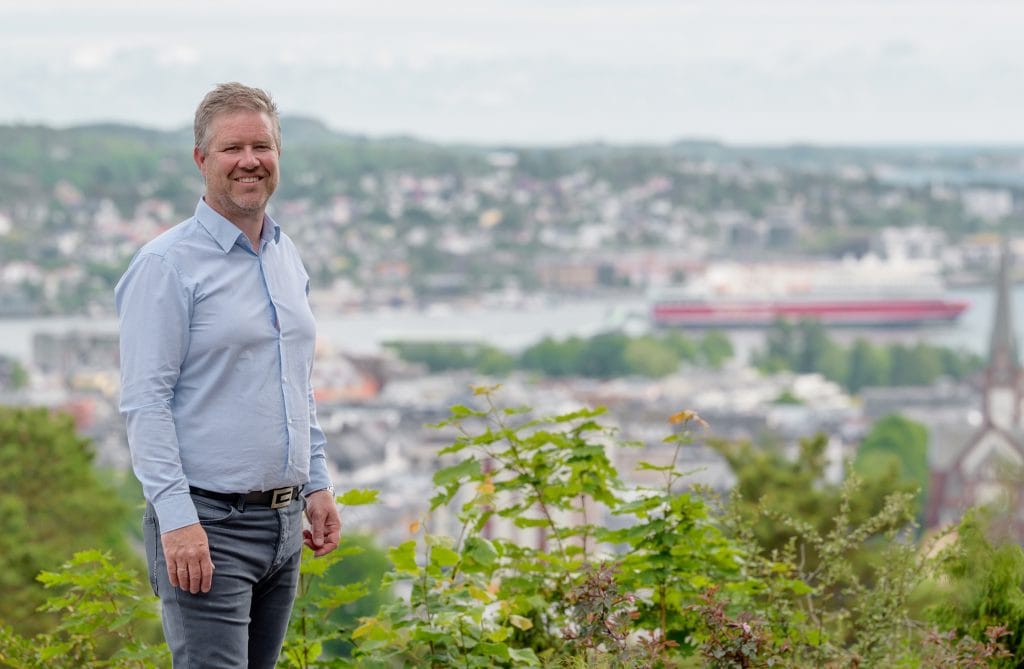
One of the areas where the company is now increasing its efforts is RAS service and aftersales for land-based aquaculture facilities. CEO Kent Kongsdal Rasmussen is therefore very pleased to have secured Yngve Lystad (48) as head of the new department. Lystad joins from the position of technical manager at Pharmaq and has a background in fish health. In recent years, he has worked with technology for cleaning treatment water on well boats after treatments against salmon lice.
The new team is now being built with experts from several fields. At the same time, Rasmussen believes this will create great value for both existing and new facilities. A more traditional choice would have been a manager with a background in sales of mechanical products. Yngve’s strength, however, is his broad experience in technology, customer service, and diagnostics. Diagnostics is especially important as it makes it easier to find the right solutions within both technology and biology. Therefore, Lystad will be a key person in the development of the aftersales of the future.
– Kent Kongsdal Rasmussen, CEO, Pure Salmon Kaldnes
Service Throughout the Facility Life Cycle
Lystad has clear goals for the new department. He believes the key to success in land-based aquaculture is better knowledge transfer between suppliers and customers. The department will follow the entire life cycle of the facilities. This includes the project phase, handover, warranty, start-up, operation, maintenance, and upgrades. In addition, the team works to improve processes within biosecurity, fish welfare, and training.
The new department will gather broad expertise in operations and technology. At the same time, the team will support operations managers and operators in developing new standards for RAS facilities. Knowledge of equipment, technology, process understanding, and fish welfare must therefore be built up even before the facilities are put into operation. This is a necessary lifelong process for both facilities and personnel.
–– Yngve Lystad, service and aftersales manager
Automation and Fish Welfare in Facilities
The 48-year-old also envisions an increasingly automated operation of the land-based aquaculture facilities.
– We need to reduce routine operations. Therefore, sensors, cameras, machine learning, remote monitoring, and cloud-based solutions will become important parts of the strategy. This will provide safer and more efficient operations. At the same time, the fish keepers can spend more time on optimal operations and fish welfare. We also want to take this standard further internationally when new projects are to be realized.
–– Yngve Lystad, service and aftersales manager
The company sees service and aftersales as an increasingly important part of future RAS projects. As more land-based facilities move into operation, the need for long-term technical support, training and operational follow-up continues to grow.