
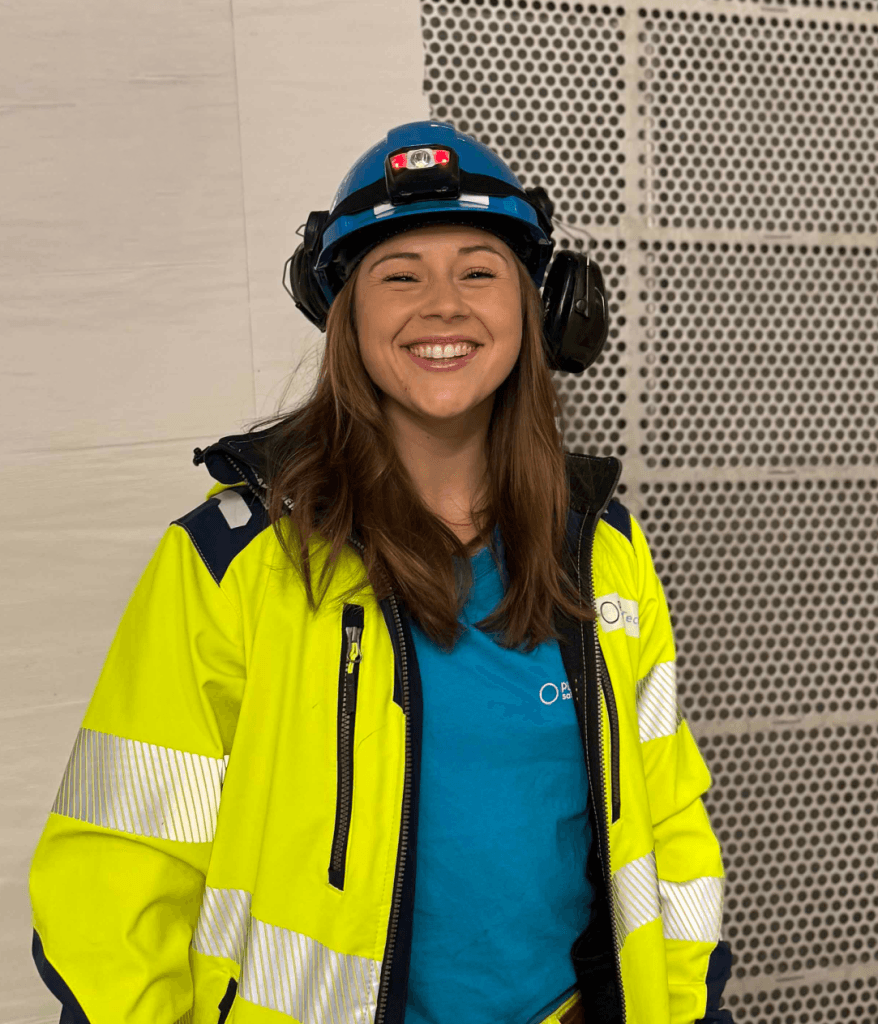
In search of stable bacterial systems
For Madeleine, the opportunity to apply research-based knowledge in real-world projects was one of the main reasons for joining Pure Salmon Technology. Through her studies and research, she developed expertise in microbial systems and how bacterial communities are shaped by their environment. This work led her into aquaculture, where she focused on understanding how stable and beneficial bacterial communities can be established in RAS facilities.
“I wanted to use this knowledge in practice and was looking for a workplace where I could work across disciplines and close to industry. At PSTech, my expertise could be used to optimise biological processes in RAS and contribute to stable water quality for the fish.”
One of the most rewarding aspects of her role is seeing how theory and models perform in practice. “Particularly within MBBR and biofilter processes, there is great value in understanding capacity and efficiency at a microbiological level and translating that knowledge into robust designs and operational strategies. Through documentation, water sampling and analysis, as well as collaboration with universities and research institutions, we continuously validate and improve our solutions.”
She describes the working environment as highly collaborative and built around strong technical expertise. “Many challenges require input from several disciplines. There is a low threshold for discussing technical topics, and conversations with knowledgeable colleagues always provide new perspectives.”
Looking ahead, she believes microbial stability will play an increasingly important role in the future of aquaculture. “There is significant potential in understanding how to achieve microbial stability in land-based aquaculture. This is important both for maintaining robust biofilters and for ensuring that fish live in an environment with a beneficial microbiota. At the same time, one of the industry’s key challenges is ensuring stable operation under varying conditions and bridging the gap between theoretical capacity and actual performance.”
Over the next year, she hopes to contribute to the further development and standardisation of biological process design, particularly related to MBBR systems and water quality. “I would also like to strengthen the connection between operational data, laboratory analyses and design criteria, so that experience from existing facilities can be used more actively when developing new projects.”
Education: PhD in Microbial Systems, MSc Biotechnology (NTNU)
Interests: Bacterial systems, MBBR, FBBR, water quality, sensors, documentation, R&D and product development