
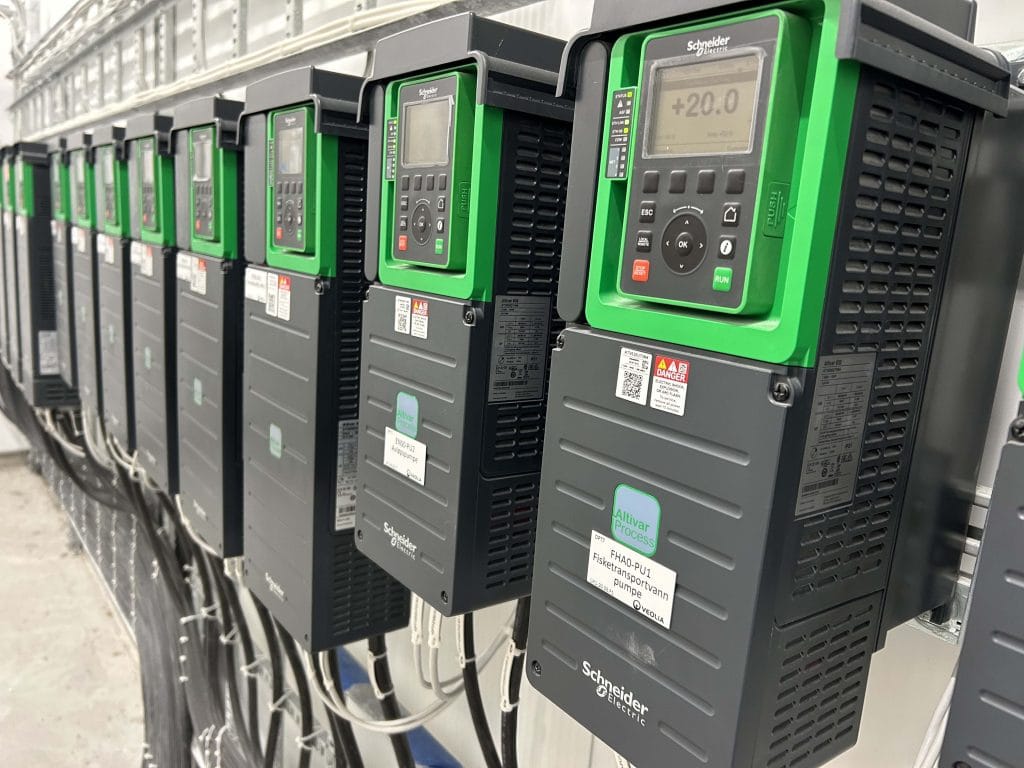
Energy consumption is a major cost driver in RAS. It varies significantly between facilities and depends on both design and operation.
Typical consumption
Reported energy use ranges from 3 to 10 kWh per kg fish, depending on system and production stage.
Energy demand is expected to increase as more facilities are developed.
Where energy is used
Key contributors include:
- water circulation and pumping
- air supply and degassing
- temperature control
- biofilter operation
Energy use is continuous and directly linked to system stability.
Where efficiency is lost
Common inefficiencies include:
- fouling of heat exchangers, reducing recovery by 10–30%
- unnecessary pressure losses in the system
- suboptimal pump and blower settings
Small inefficiencies scale quickly.
Operational adjustments
Energy use can be influenced by:
- adjusting pump frequency and flow
- optimising air supply and underpressure
- cleaning and maintenance routines
- system monitoring and sensor use
Key takeaway
Energy efficiency is achieved through stable operation and continuous adjustment, not single measures.